

Satake Megumi Santoku engraved Japanese kitchen knife Soccer Budapest 2026 – Japanese quality in the kitchen
66 $
57 $
15
Satake Megumi Santoku engraved Japanese kitchen knife Soccer Budapest 2026 – Japanese quality in the kitchen

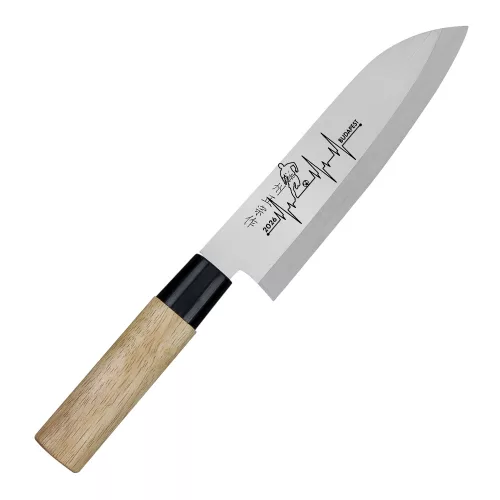

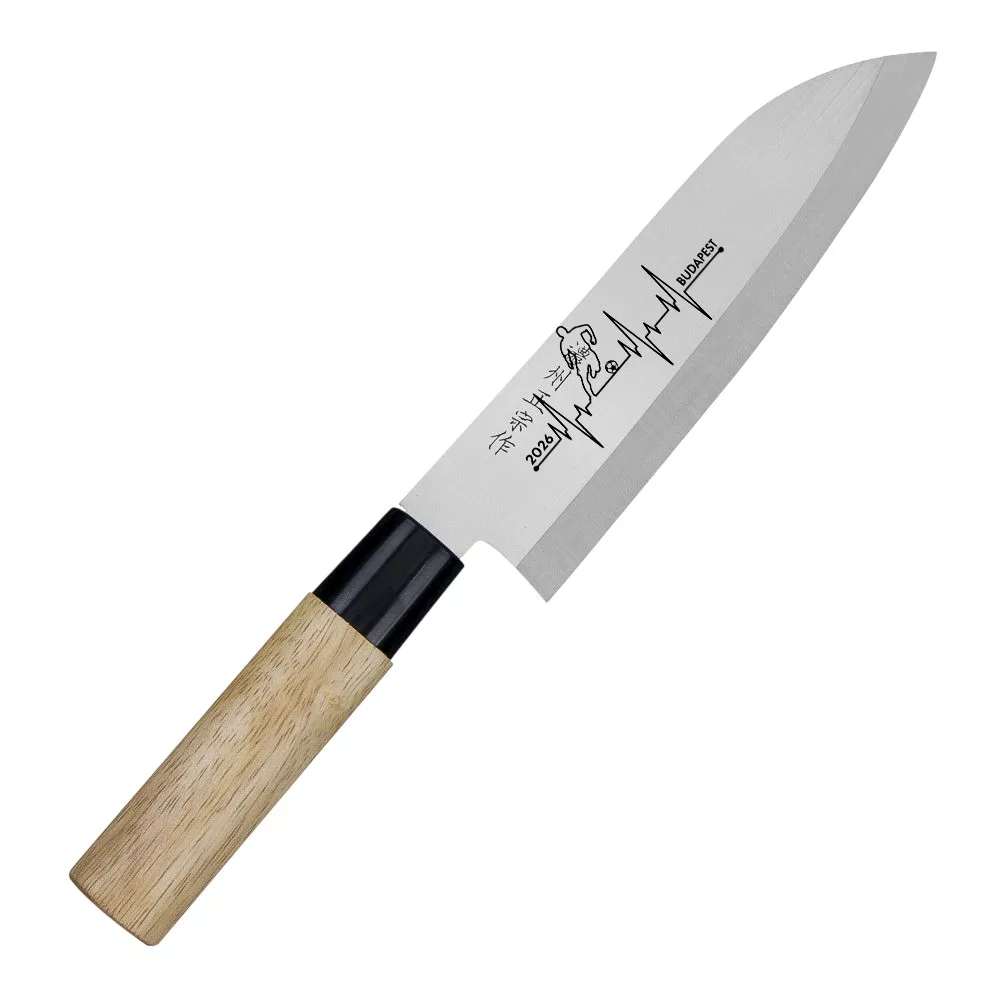
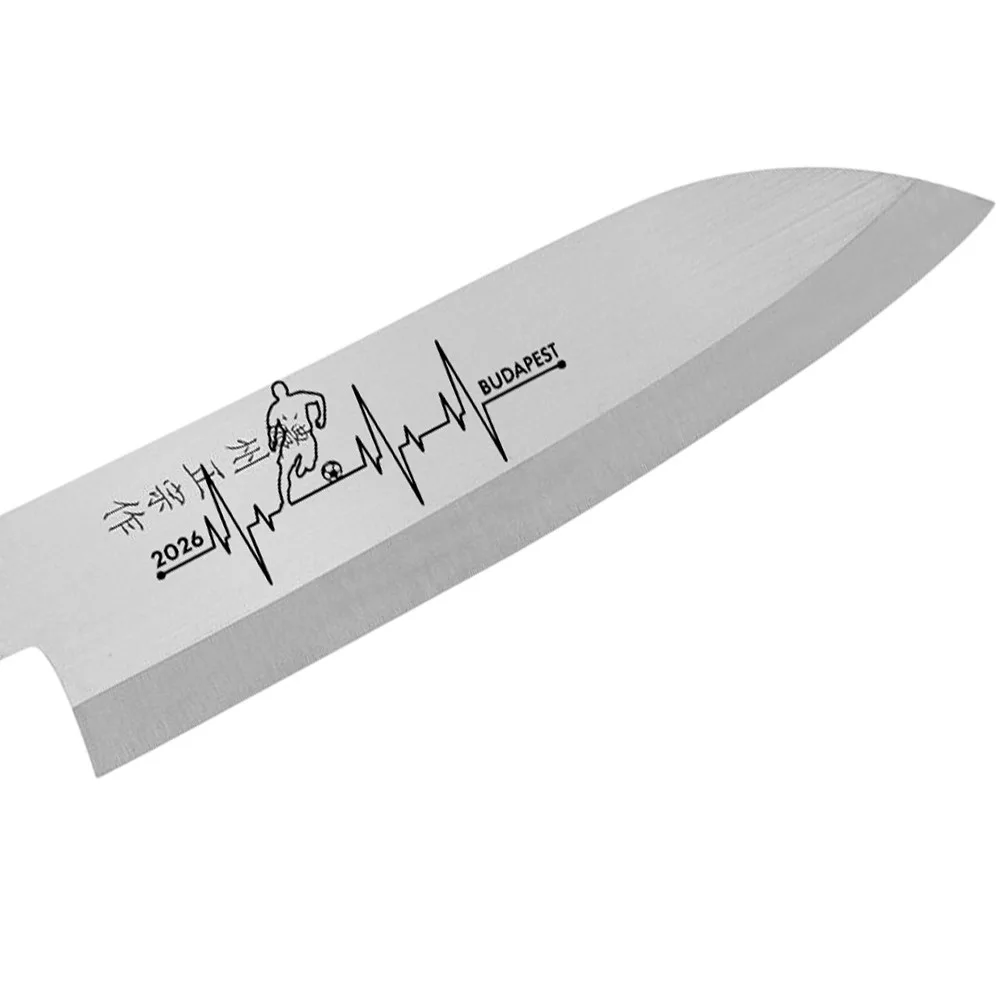
At the end of May 2026, the eyes of the world rest on Budapest, and the air vibrates with the tension that only the struggle for the continent's most prestigious trophy can create. This engraved Satake Santoku knife is made for those who don't just watch the game, but live every moment of it. Just as the finalists strive for perfection on the pitch, this Japanese masterpiece becomes the playmaker of your kitchen: every cut is as pinpoint and confident as a winning goal in the final minutes.
This knife is not just a tool, but an eternal memento of that night when Budapest became the capital of the football world.
Blade material - U420J2 (Nippon Koshuha) stainless steel
Handle material - Rubberwood
Hardness - 56 HRC
Total length - 30 cm
Blade length - 17 cm
Blade width - 4.5 cm
Blade thickness - approx. 1.7 mm
Edge grind - double-sided symmetrical
Weight - approx. 90 g
Manufacturer: Satake Cutlery Mfg. Co., Ltd. Made in Japan.
Item number: 801-614-gravirozott-foci-budapest

66 $
57 $
Start date: 23.06.2026
While supplies last
Discount
15
Savings
10 $
Points earned after purchase:
3 $
We also recommend the following product as an accessory
Details
SATAKE MEGUMI SANTOKU JAPANESE KNIFE FOOTBALL 2026 BUDAPEST ENGRAVING - 17 CM - THE VERSATILE KITCHEN MASTER

ADDITIONAL INFORMATION:
How to use Japanese chef knives correctly? (Click on the text to read the article.)
Modern Japanese knifemaking: Where tradition meets innovation (Click on the text to read the article.)
Look no further if you are looking for an unforgettable gift that combines practicality with artistic craftsmanship. This special Budapest 2026 themed Santoku is not just a tool, but a symbol of your unquenchable love for the sport, bringing the magic born on the pitch and the excitement of the European football celebration into your home.
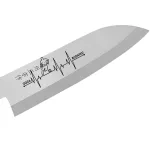
The exceptional detail of the graphics on the blade, evoking the 2026 final in Budapest, is guaranteed by 100-watt MOPA laser technology. This modern process allows for deep and high-contrast engraving that far surpasses traditional solutions, ensuring a luxury feel and timeless value.
Give a lasting memory where Japanese steel precision meets the greatest moments of the football world!
The Satake Megumi Santoku Japanese kitchen knife is a true all-rounder in the kitchen, a perfect choice for chopping vegetables, slicing meat, and even fish. The characteristic curved edge facilitates chopping with rocking motions, while the wide blade provides practical help for easily gathering and moving chopped ingredients. The comfortable, raised handle ensures that your fingers never touch the cutting board or the food, allowing you to use it with maximum safety and confidence during cooking.
The origin of the santoku (三徳) knife dates back to Japan during the Showa era (1926-1989). Changing eating habits, increasing red meat consumption, and the spread of Western cuisine made it necessary for Japanese kitchen knives to adapt. The direct predecessor of the santoku knife was the bunka knife, which was born from the combination of the properties of gyuto (meat) and nakiri (vegetable) knives.
The name "santoku" refers to the knife's three main areas of use, for which it is often called the "knife of three virtues":
- Slicing: The santoku knife is excellent for slicing meat, fish, and vegetables thinly and evenly. The ideal blade length, usually between 15-18 cm, fits most ingredients perfectly.
- Dicing: The excellent edge of the santoku blade allows for extremely precise dicing, whether of vegetables or other ingredients.
- Chopping: The special shape and optimal weight of the blade significantly facilitate the quick and efficient chopping of vegetables and herbs.
The popularity of the santoku knife spread worldwide at the end of the 20th century, and today it has become one of the essential and most beloved knife types in modern kitchens. The Satake Megumi Santoku represents Japanese precision and quality, a reliable companion for everyday cooking.
Key features:
- Satake Megumi Santoku Japanese knife
- Budapest 2026 football engraving
- 17 cm blade length
- Versatile use: vegetables, meat, fish
- Easy chopping thanks to the excellent edge
- Wide blade for moving cut ingredients
- Comfortable, raised handle for safe use
KNIFE STEEL COMPARISON TABLE
|
Steel Type |
Type |
Composition (Main elements) |
Advantages | Disadvantages | Typical Use | Manufacturer |
| AUS-8A | Mid-range stainless steel |
Carbon: 0.70 - 0.75% Chromium: 13.00-14.50% Molybdenum: 0.10-0.30% Vanadium: 0.10-0.26% |
Good corrosion resistance: High chromium content. Easy to sharpen: Average hardness. Adequate edge retention: Perfect for everyday use. Cost-effective: Common choice in mass production. |
General edge retention: Requires normal frequency of sharpening. Lower wear resistance: Compared to harder Japanese steels. |
Kitchen knives. Everyday use pocket knives. Fixed blade knives. |
AICHI - JAPAN |
| FAX-38 |
High-Speed Steel (HSS) Special use steel Japanese carbon steel |
Carbon: 1.23-1.33% Tungsten: 5.70-6.70% Molybdenum: 4.70-5.30% Vanadium: 2.70-3.20% Cobalt: 8.00-8.80% |
Excellent wear resistance: Due to high hardness and alloys. Extreme edge retention: For demanding cutting tasks. High heat resistance: Retains hardness even at high temperatures.
|
Harder to sharpen: Due to extreme hardness. Higher price: Due to high alloy content and manufacturing technologies. Not stainless: Japanese carbon steel. Recommended for expert hands! |
Professional chef knives. Special knives where edge retention is key. Industrial cutting tools (e.g., drills, cutters). |
NACHI FUJIKOSHI - JAPAN |
| MVS10Cob (DAMASCUS) | Cobalt-alloy stainless steel |
Carbon: 1.00% Chromium: 14.27% Cobalt: 1.34% Molybdenum: 0.96% Vanadium: 0.21% |
Excellent edge retention: Due to cobalt content. Excellent corrosion resistance: Through the alloys. Balanced performance: For professional knives. Excellent toughness: Often compared to VG10 due to similar composition. |
Currently only available in Damascus version. More expensive than simpler stainless steels. |
High-end kitchen knives. Quality pocket knives. General purpose knives where a durable edge is needed. |
NACHI FUJIKOSHI - JAPAN |
| U420J2 | Low-carbon stainless steel |
Carbon: 0.15-0.36% Chromium: 12.00-14.00% Manganese: 1.00% Nickel: 1.00% Silicon: 1.00% Sulfur: 0.03% |
Excellent corrosion resistance: High chromium content. Easy to sharpen: Relatively soft. (Compared to other Japanese steels.) Very flexible: Difficult to break. Cost-effective: Basic Japanese stainless steel. |
Frequent sharpening: Compared to harder Japanese steels. |
Basic (home) kitchen knives. Diving knives (high corrosion resistance). Food industry equipment. |
NIPPON KOSHUHA - JAPAN |
| Japanese carbon steel (Traditional) |
Carbon: 1.25-1.35% Manganese: 0.20-0.30% Phosphorus: 0.02% Silicon: 0.010-0.20% |
Extreme sharpness: Very fine grain structure and high carbon content. Easy to sharpen: Often sharper than many stainless steels. Excellent cutting performance: Base material for traditional Japanese knives. Patina formation: Develops a characteristic surface over time. |
Prone to rusting: No chromium content. High maintenance: Requires careful cleaning and storage. Recommended for expert hands! |
High-quality Japanese kitchen knives. Razors. Uses where sharpness is paramount and maintenance is not an issue. |
HITACHI - JAPAN |
Bundle offers
Reviews
Be the first to write a review!
Similar products